


What is The E-commerce, Types, and Benefits of E-commerce
E-commerce, short for electronic commerce, refers to the buying and selling of goods or services using the internet, as well as the transfer of money and data to execute these transactions. It encompasses a wide variety of businesses, from consumer-based retail sites to auction or music sites, as well as business exchanges trading goods and services between corporations.
Key Components of E-commerce
-
Online Storefront:
- The website or app where consumers can browse and purchase products or services. This includes product listings, search functionality, and a user-friendly interface.
-
Shopping Cart:
- A virtual cart that allows customers to select and store items they intend to purchase.
-
Payment Gateway:
- A secure online system that processes credit card transactions and other forms of electronic payments.
-
Order Management System (OMS):
- A system to track orders from placement to fulfillment, manage inventory, process returns, and ensure timely delivery.
-
Customer Relationship Management (CRM):
- Tools to manage interactions with current and potential customers, including customer service, marketing, and sales support.
-
Security:
- Measures to protect customer data and transaction information, including encryption, SSL certificates, and fraud prevention.
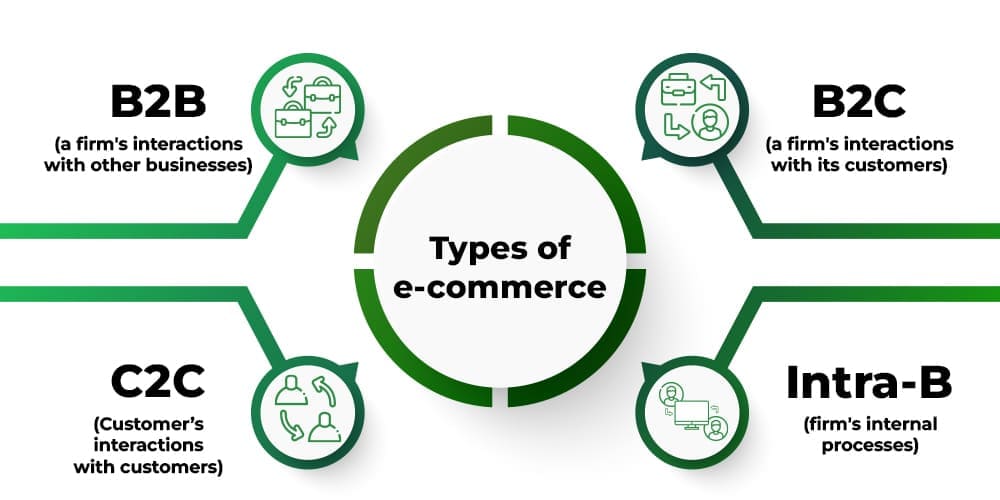
Types of E-commerce
-
Business-to-Consumer (B2C):
- Transactions between businesses and individual consumers. Examples include Amazon and eBay.
-
Business-to-Business (B2B):
- Transactions between businesses, such as manufacturers selling to distributors or wholesalers.
-
Consumer-to-Consumer (C2C):
- Transactions between consumers, often facilitated by third-party platforms like eBay and Craigslist.
-
Consumer-to-Business (C2B):
- Transactions where individuals sell products or services to businesses, such as freelancers offering services on platforms like Upwork.

Benefits of E-commerce
-
Convenience:
- Shoppers can browse and purchase products 24/7 from anywhere with an internet connection.
-
Global Reach:
- Businesses can reach customers worldwide, expanding their market beyond geographic boundaries.
-
Lower Operating Costs:
- Reduced need for physical storefronts and associated expenses, such as rent and utilities.
-
Personalization:
- Ability to use data analytics to offer personalized shopping experiences based on customer preferences and behaviors.
-
Speed and Efficiency:
- Faster transactions and delivery of digital goods, and streamlined logistics for physical goods.
Steps to Starting an E-commerce Business
-
Choose a Niche:
- Select a specific market segment or product category to focus on, considering market demand and competition.
-
Create a Business Plan:
- Outline your business model, target audience, marketing strategy, and financial projections.
-
Register Your Business:
- Choose a business name, register your business, and obtain any necessary licenses or permits.
-
Select an E-commerce Platform:
- Choose a platform to build your online store, such as Shopify, WooCommerce, Magento, or BigCommerce.
-
Design Your Store:
- Create an attractive and user-friendly website design, including product pages, navigation, and checkout processes.
-
Add Products:
- List your products with detailed descriptions, high-quality images, pricing, and inventory information.
-
Set Up Payment and Shipping:
- Integrate payment gateways for secure transactions and set up shipping methods and rates.
-
Launch and Market Your Store:
- Launch your online store and implement digital marketing strategies to attract and retain customers, such as SEO, social media marketing, email marketing, and paid advertising.
Summary
E-commerce is a powerful business model that leverages the internet to facilitate the buying and selling of goods and services. It offers numerous benefits, including convenience, global reach, and lower operating costs. By understanding the key components and following the steps to establish an e-commerce business, entrepreneurs can effectively tap into this growing market and meet the needs of modern consumers.


Most viewed


ads

Get The Best Blog Stories Into Your Inbox!
Sign up for free and be the first to get notified about new posts.